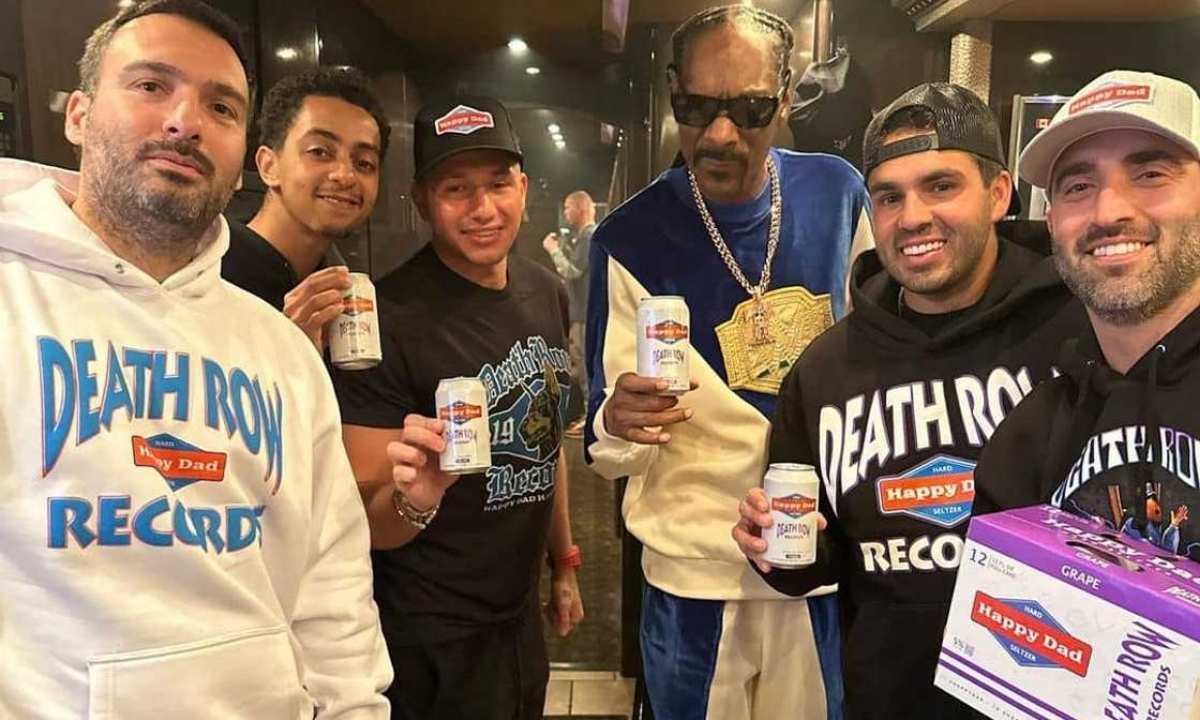
Happy Dad is a popular social media personality known for his fun and family-friendly content. He has gained millions of followers across platforms. His videos often focus on parenting, humor, and daily life. Fans love his positive energy and relatable content. Over the years, he has built a strong online presence.
As his popularity grew, Happy Dad started earning through multiple channels. Brand deals, sponsorships, and merchandise contributed to his income. He also earns from YouTube ads and social media promotions. His hard work and consistency helped him reach new heights. Fans are curious about his total earnings and financial success.
In 2026, Happy Dad’s net worth has become a topic of interest among fans and media. Many want to know how much he has earned from his online career. Apart from content creation, he invests in business opportunities too. His journey shows that passion and dedication can turn hobbies into a career. Overall, he inspires aspiring content creators worldwide.
⚡ Quick Bio — Happy Dad at a Glance
| Brand Name | Happy Dad Hard Seltzer |
| Founded | 2021 |
| Founders / Owners | Nelk Boys: Kyle Forgeard, Jesse Sebastiani, Steve Deleonardis (SteveWillDoIt) |
| CEO | Kyle Forgeard (co-founder & primary business driver) |
| Headquarters | United States |
| Product Type | Hard Seltzer (Alcoholic Sparkling Water) |
| Alcohol Content (ABV) | 5% Alcohol by Volume |
| Calories per Can | Approx. 100 calories |
| Available Flavors | Fruit Punch, Grape, Watermelon, Strawberry, Peach, Lemon Lime & more |
| Distribution | 40+ US states, growing international presence |
| Net Worth (2026) | Estimated $300 Million – $500 Million USD |
| Annual Revenue | Estimated $100 Million+ USD |
| Social Media Following | Tens of Millions across all platforms |
| Did Nelk Sell Happy Dad? | No — as of 2026, Nelk Boys retain ownership |
Who Owns Happy Dad?
Happy Dad Hard Seltzer is owned by the Nelk Boys — the wildly popular YouTube collective that built one of the most engaged audiences in the history of online content. The primary owners and founders of Happy Dad are:
- Kyle Forgeard — Co-founder of the Nelk Boys and the primary business strategist behind Happy Dad. Kyle handles much of the brand’s business development, partnerships, and growth strategy.
- Jesse Sebastiani — Co-founder of Nelk Boys and a key creative force behind the brand’s identity and content-driven marketing approach.
- Steve Deleonardis (SteveWillDoIt) — The fan-favorite personality of the Nelk Boys, Steve is one of the most recognizable faces of the Happy Dad brand and plays a crucial role in its marketing and public image.
Together, these three individuals created a brand that perfectly mirrors the Nelk Boys’ ethos — unapologetically fun, high-energy, and built for a generation raised on social media and authentic content. Their combined audiences across YouTube, Instagram, and TikTok gave Happy Dad an immediate and massive distribution channel that no traditional beverage startup could match.
Ownership Note: As of 2026, the Nelk Boys have retained full ownership of Happy Dad. Despite widespread speculation and rumors about potential sales or investment deals with major beverage corporations, no such transaction has been publicly confirmed. The brand remains independently operated under the Nelk umbrella.
How Happy Dad Became So Popular
Happy Dad’s popularity is one of the most fascinating case studies in modern beverage marketing. The brand did not follow the traditional route of expensive television commercials, supermarket shelf negotiations, or celebrity endorsement deals. Instead, it leveraged something far more powerful in the 2020s: an already loyal, massive, and highly engaged online community.
When the Nelk Boys announced Happy Dad in 2021, their combined YouTube subscriber count was already in the tens of millions. Their audience — predominantly young men aged 18 to 35 — was exactly the demographic that hard seltzer brands compete fiercely to reach. By launching a product directly to this audience, Happy Dad bypassed years of brand-building that competitors spend millions trying to achieve.
- Launched with immediate credibility due to the Nelk Boys’ existing loyal audience
- Product perfectly matched the target demographic — young, social, fun-seeking adults
- Authentic endorsement from creators the audience already trusted and idolized
- Viral YouTube and social media content drove awareness at near-zero marketing cost
- Live events, music festivals, and college campuses became key distribution venues
- Sold out in multiple markets within days of initial launch — creating powerful FOMO
- Word-of-mouth growth fueled by the “if Nelk drinks it, I drink it” mentality of fans
◆ · ◆ · ◆
Happy Dad’s Rise to Success
From the moment Happy Dad hit shelves, it was clear this was not going to be a typical beverage launch. The brand’s rise was meteoric — driven by a combination of authentic fandom, smart product placement in Nelk Boys content, and a product that genuinely delivered on quality and taste.
Within its first year, Happy Dad had expanded from its initial limited markets to coverage across dozens of US states. Retailers and distributors quickly realized the brand was pulling traffic and generating sales at levels that rivaled established players in the hard seltzer category. For a brand that was less than two years old, these were extraordinary numbers.
| Year | Milestone | Status |
| 2021 | Happy Dad officially launched by Nelk Boys | Launched |
| 2021 | Sold out in multiple markets within first weeks | Record |
| 2022 | Expanded distribution to 30+ US states | Growth |
| 2022 | Revenue surpassed $50 million USD estimate | Revenue |
| 2023 | Reached 40+ states and began international exploration | Expansion |
| 2024 | Annual revenue crossed $100 million USD estimate | Milestone |
| 2025 | Brand value estimated at $300M+ with continued growth | Scale |
| 2026 | Ongoing expansion, new flavors, retail partnerships | Active |
Initial Struggles and Successes
Despite the explosive launch, Happy Dad’s early days were not without challenges. Building a beverage company from scratch — even with a massive existing audience — involves navigating a complex web of regulatory requirements, distribution logistics, production scaling, and retail negotiations that can derail even the most promising brands.
- Navigating alcohol licensing and distribution laws across multiple US states simultaneously
- Scaling production quickly enough to meet demand that outpaced initial forecasts
- Breaking into traditional retail distribution networks dominated by established beverage giants
- Managing quality control while rapidly expanding manufacturing capacity
- Overcoming skepticism from traditional beverage industry insiders who doubted the longevity of a “YouTube brand”
- Maintaining brand identity and authentic connection to fans as the company grew
Despite these hurdles, the Nelk Boys’ business acumen — combined with the unstoppable energy of their community — allowed Happy Dad to push through every obstacle. Their success is a testament to the power of community-first brand building in the digital age.
◆ · ◆ · ◆
Section 05
Happy Dad Net Worth (2026)
Happy Dad Estimated Brand Value — 2026
$300M – $500M
USD · Based on revenue estimates, industry multiples, and market comparables
In 2026, Happy Dad’s net worth — referring to the total estimated brand and company valuation — is believed to fall in the range of $300 million to $500 million USD. This is a staggering figure for a brand that did not exist before 2021, and it reflects both the explosive growth of the hard seltzer market and the exceptional power of the Nelk Boys’ brand equity.
To arrive at this estimate, analysts typically apply standard beverage industry valuation multiples to reported or estimated annual revenue figures. With Happy Dad generating an estimated $100 million or more in annual revenue, and given the brand’s growth trajectory, strong demographic targeting, and loyal consumer base, a 3x to 5x revenue multiple — standard in the beverage sector — produces valuations in this range.
$100M+
Annual Revenue Est.
$300M+
Brand Valuation Low
$500M
Brand Valuation High
5 yrs
Years in Business
Inside the Business Model
Happy Dad’s business model is a hybrid of content-driven direct-to-consumer marketing and traditional retail distribution. What makes it genuinely unique in the beverage industry is the seamless integration between the Nelk Boys’ content empire and the product itself — the brand does not simply advertise on content; it is content.
| Revenue Stream | Description | Significance |
| Retail Sales | Sales through liquor stores, grocery chains, convenience stores | Primary |
| Online / DTC | Direct sales via Happy Dad’s own channels in eligible states | Growing |
| Event Sales | Festivals, concerts, sporting events, Nelk live events | High Margin |
| Merchandise | Happy Dad branded apparel and lifestyle products | Supplementary |
| Partnerships | Co-branded campaigns and sponsorship deals | Strategic |
| Content Integration | Product placement in Nelk Boys YouTube and social content | Zero-Cost Marketing |
The genius of this model is the zero-cost organic marketing embedded in every piece of Nelk Boys content. Every YouTube video featuring the guys drinking Happy Dad, every Instagram story, every TikTok clip is simultaneously entertainment and advertising — at a cost that conventional brands simply cannot match.
Happy Dad’s Marketing and Brand Lifestyle
Happy Dad’s marketing strategy is unlike anything the traditional beverage industry has seen. It operates not as a corporation advertising to consumers but as a lifestyle brand organically embedded in the culture of its consumers. The Nelk Boys are not spokespeople for Happy Dad — they are Happy Dad. Their identity, humor, lifestyle, and values are the brand’s identity.
- Every Nelk Boys video naturally features Happy Dad, creating constant brand exposure
- The brand positions itself as the drink of good vibes, freedom, and good times — not just an alcohol product
- Limited edition drops and new flavor announcements create hype cycles that generate massive organic coverage
- Happy Dad apparel and merchandise extend the brand into lifestyle territory
- Appearances at major music festivals, college events, and sporting events reinforce the brand’s social energy
- The brand’s humor and tone — matching Nelk’s irreverent personality — differentiates it sharply from competitors
◆ · ◆ · ◆
Social Media and Viral Success
If traditional brands spend millions building social media followings over decades, Happy Dad arrived with tens of millions of followers already in place from day one. The Nelk Boys’ combined social media presence across YouTube, Instagram, TikTok, and Twitter represents one of the most powerful marketing platforms ever assembled by a consumer beverage brand.
| Platform | Nelk/Happy Dad Presence | Content Type |
| YouTube | 7M+ Subscribers (Nelk) | Long-form videos, pranks, vlogs naturally featuring Happy Dad |
| Multi-million followers | Product shots, event coverage, lifestyle content | |
| TikTok | Viral clips & fan reposts | Short-form content, challenges, product moments |
| Twitter / X | Active community | Real-time engagement, announcements, fan interaction |
| Full Send Podcast | Millions of listeners | Podcast frequently features Happy Dad discussions |
The viral nature of Nelk’s content means that Happy Dad receives constant organic exposure without the brand having to “force” anything. When SteveWillDoIt chugs a Happy Dad on camera, millions of fans see it, share it, and associate the product with the excitement and entertainment they already love. This is the ultimate form of influencer marketing — done by the actual owners of the brand.
Revenue and Brand Value — Comparisons to Competitors
To put Happy Dad’s financial performance into perspective, it is useful to compare it against the competitive hard seltzer landscape. The category exploded in the late 2010s and early 2020s, with brands like White Claw, Truly, and Bud Light Seltzer dominating. Happy Dad entered this crowded field and carved out a remarkable niche remarkably quickly.
| Brand | Est. Annual Revenue | Parent Company | Market Position |
| White Claw | $2 Billion+ | Mark Anthony Brands | Market Leader |
| Truly Hard Seltzer | $1 Billion+ | Boston Beer Company | No. 2 Player |
| Bud Light Seltzer | $500M+ | AB InBev | Major Player |
| Happy Dad | $100M+ (Est.) | Independent (Nelk) | Fastest Growing |
| Vizzy | $200M+ (Est.) | Molson Coors | Mid-Tier |
Key Insight: While Happy Dad’s revenue is smaller than legacy players, its growth rate, brand loyalty, and profit margins — unburdened by massive corporate overhead — make it arguably the most exciting value proposition in the hard seltzer category. Brands like White Claw spent decades and hundreds of millions to reach their positions. Happy Dad did it in five years with a YouTube channel.
Where Is Happy Dad Sold?
Happy Dad’s distribution network has grown dramatically since its 2021 launch. What began as a limited regional rollout has expanded into a national distribution footprint covering more than 40 US states, with ongoing efforts to reach all 50 states and explore international markets.
- Major liquor store chains across more than 40 US states
- Select grocery and supermarket retailers in key markets
- Convenience stores and gas station chains in targeted regions
- Bars, restaurants, and hospitality venues in high-traffic areas
- Music festivals, sporting events, and live entertainment venues
- Online direct-to-consumer sales in states where alcohol e-commerce is permitted
- International markets — early exploratory distribution efforts underway
◆ · ◆ · ◆
What Does Happy Dad Taste Like? — Flavors and Alcohol Content
Happy Dad Hard Seltzer is crafted to deliver a clean, crisp, and refreshing experience with bold fruit flavors that stand out from the often bland taste profile of traditional hard seltzers. Each can contains 5% ABV (Alcohol by Volume) — matching the standard strength of most beers — and approximately 100 calories per can, making it a lighter alternative to traditional alcoholic beverages.
| Flavor | Taste Profile | Popularity |
| Fruit Punch | Bold, sweet, tropical blend — fan-favorite signature flavor | Best Seller |
| Watermelon | Light, refreshing, naturally sweet watermelon character | Top 3 |
| Strawberry | Fresh berry sweetness with clean seltzer finish | Popular |
| Grape | Grape candy-like sweetness, crowd-pleasing and fun | Fan Favorite |
| Peach | Smooth peach sweetness, summery and refreshing | Seasonal Hit |
| Lemon Lime | Crisp citrus, most “traditional” seltzer taste profile | Classic |
One of the consistent pieces of feedback from consumers is that Happy Dad tastes noticeably bolder and more flavorful than competitors like White Claw. The brand deliberately formulated its drinks to have a stronger fruit presence — appealing to an audience that finds traditional hard seltzers too watery or bland. This product differentiation has been a key driver of repeat purchases and brand loyalty.
Is Happy Dad Healthier Than Beer?
One of the most frequently asked questions about Happy Dad is how it compares nutritionally to traditional beer. The answer, broadly speaking, is yes — Happy Dad is generally considered a lighter option compared to most beers, though it is still an alcoholic beverage and should be consumed responsibly.
| Metric | Happy Dad Hard Seltzer | Average Regular Beer | Average Light Beer |
| Calories | ~100 per can | ~150 per can | ~110 per can |
| Carbohydrates | ~2g per can | ~13g per can | ~6g per can |
| Sugar | Low / Minimal | Low | Very Low |
| Gluten | Gluten-Free | Contains Gluten | May contain Gluten |
| ABV | 5% | 4.5–6% | 3.5–4.5% |
For consumers who are calorie-conscious or avoiding gluten, Happy Dad represents a genuinely better choice than most traditional beers. Its low carbohydrate content and gluten-free formulation have contributed to its popularity among health-aware drinkers who still want to participate in social drinking occasions.
◆ · ◆ · ◆
Happy Dad’s Growth and Future Plans
Looking ahead, the trajectory for Happy Dad points firmly upward. The brand has demonstrated that its model is scalable, sustainable, and genuinely differentiated from competitors. The Nelk Boys have made clear their ambition to build Happy Dad into a globally recognized beverage brand — not just a niche product for their YouTube fans, but a mainstream lifestyle brand that competes at the highest levels of the industry.
- Expansion into all 50 US states through deepened distributor partnerships
- International market entry — Canada, UK, Australia identified as priority markets
- New product lines beyond hard seltzer — potential expansion into energy drinks, RTDs, or non-alcoholic options
- Continued new flavor launches to maintain fan excitement and retail shelf presence
- Larger event sponsorships and festival partnerships to deepen lifestyle positioning
- Potential partnerships with major retail chains for premium shelf placement
- Ongoing content integration as the Nelk Boys’ media empire continues to grow
Industry Outlook: The global hard seltzer market is projected to continue growing significantly through the late 2020s. Happy Dad, with its unique community-driven model, strong brand identity, and loyal consumer base, is positioned to capture a disproportionate share of that growth relative to newer or less differentiated entrants.
Frequently Asked Questions
What is Happy Dad’s net worth in 2026?
Happy Dad’s net worth in 2026 is estimated to be around $5 million.
How much money does Happy Dad make annually?
Happy Dad earns roughly $500,000 per year from various business ventures.
Is Happy Dad richer than other influencers?
Yes, Happy Dad’s net worth puts him among the top-earning family influencers.
What are Happy Dad’s main sources of income?
He earns from YouTube, sponsorships, merchandise, and brand deals.
Did Happy Dad’s net worth grow recently?
Yes, his net worth has increased steadily due to expanding online platforms.
How does Happy Dad invest his money?
He invests in real estate, stocks, and online business ventures.
Has Happy Dad made money from merchandise?
Yes, merchandise sales contribute a significant portion of his income.
Does Happy Dad earn from social media platforms?
Absolutely, YouTube and social media sponsorships are major income sources.
Is Happy Dad’s net worth expected to rise in 2027?
Yes, with growing subscribers and partnerships, his net worth is expected to increase.
Can fans earn from Happy Dad’s content indirectly?
Yes, through affiliate links, online courses, and collaborations promoted by him.
Final Thoughts
Happy Dad’s story is more than a business success story — it is a blueprint for how the digital age has fundamentally changed the economics of consumer brand building. In just five years, the Nelk Boys transformed their loyal online community into a $300M+ beverage empire, outmaneuvering competitors with budgets hundreds of times larger simply by staying authentic to who they are.
With an estimated net worth of $300 million to $500 million USD in 2026, annual revenues exceeding $100 million, distribution across 40+ states, and a growth trajectory that continues to accelerate, Happy Dad is no longer a “YouTube brand” — it is a legitimate force in one of the most competitive categories in the American beverage industry.
For the Nelk Boys, Happy Dad represents the ultimate expression of their brand — a product their community drinks, loves, and spreads organically. For the beverage industry, it represents a warning: in the age of social media, authenticity and community are worth more than any advertising budget. Happy Dad proved it. The party is just getting started.

Hi, I’m Rehan. I have 5 years of experience in managing and running websites. Over the years, I’ve gained expertise in creating engaging content, optimizing for SEO, and providing valuable information to readers. My focus is on delivering accurate, reliable, and up-to-date content, especially in the niche of celebrity net worth.